
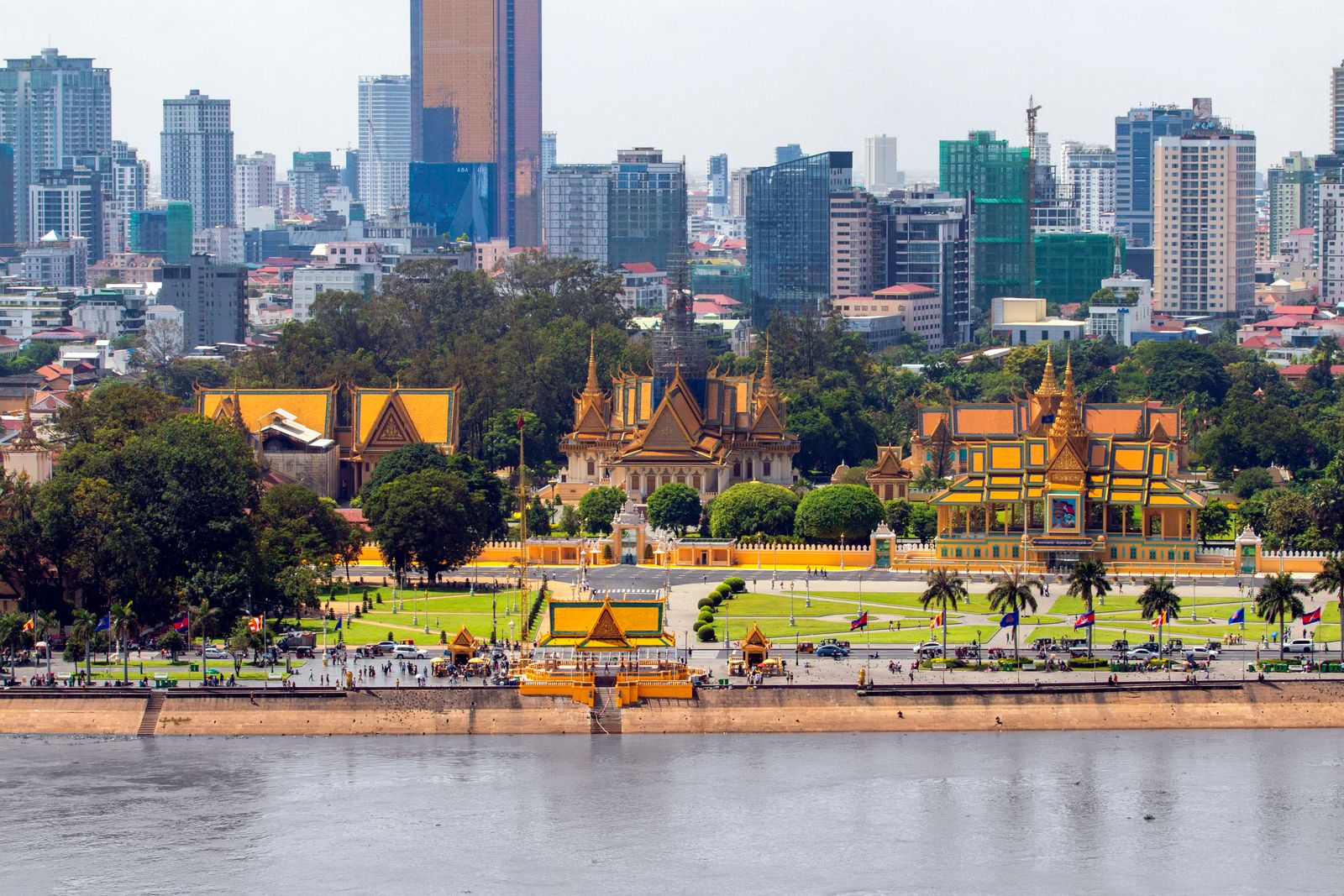
The 15 best things to do in Phnom Penh, Cambodia in 2027 include visiting the Royal Palace and Silver Pagoda, exploring the National Museum of Cambodia and Wat Phnom, learning respectfully at Tuol Sleng and the Choeung Ek Killing Fields memorial, browsing Central Market and Russian Market, and taking a Mekong sunset cruise. First-time visitors should plan two to three days in Phnom Penh, combining historic sights, inexpensive local experiences, neighborhood dining and one or two guided activities.
Imagine golden Khmer rooflines beside modern skyscrapers, tuk tuks weaving through the streets and the evening sunlight reflecting off the Tonle Sap River. Cambodia’s capital is a fascinating blend of history, architecture, art and modern city life. It is a rewarding place to visit if you want to experience more than the country’s famous temples. This guide helps you choose the best places to see, where to stay and how to travel on a sensible budget.
Quick picks: Best for cultural heritage: the Royal Palace and National Museum. Best free activity: a riverside walk. Best history visit: Tuol Sleng and Choeung Ek, approached with care. Best day trip: Silk Island. Best evening experience: a river cruise or local dinner.
Affiliate disclosure: Big City Blogger may earn a commission if you book through affiliate links at no additional cost to you. The recommended memorials are included for education and remembrance, not as leisure activities.
Cover photograph: Piseth Mao / Pexels — Royal Palace and skyline.
15 Best Things to Do in Phnom Penh, Cambodia: Attractions at a Glance
Choose the places that match your interests. This quick comparison provides planning estimates, not guaranteed 2027 fees. Click each attraction for details, maps and directions.
| Attraction in Phnom Penh | Admission | Plan for |
|---|---|---|
| Royal Palace | Paid; check current rates | 1–2 hours |
| Silver Pagoda | Check palace admission | 30–60 minutes |
| National Museum of Cambodia | Paid; confirm admission | 1–2 hours |
| Wat Phnom | Check current visitor fee | 45–60 minutes |
| Tuol Sleng Genocide Museum (S-21) | International adults $5 (2026) | 1.5–2.5 hours |
| Choeung Ek Memorial | Paid; confirm on site | 1.5–2 hours plus transit |
| Central Market (Phsar Thmei) | Free entry; purchases extra | 45–90 minutes |
| Russian Market (Tuol Tom Poung) | Free entry; purchases extra | 1–2 hours |
| Phnom Penh Riverside (Sisowath Quay) | Free promenade | 45–90 minutes |
| Independence Monument | Free exterior view | 20–40 minutes |
| Mekong River Sunset Cruise | Paid cruise; compare packages | 1–2 hours |
| Koh Dach (Silk Island) | Ferry or guided tour; variable | Half day |
| Bassac Lane | Free to explore; food and drinks extra | 1–2 hours |
| Phnom Penh Night Market | Free entry; purchases extra | 45–90 minutes |
| Cambodian Street Food and Cooking Classes | Food or class cost varies | 1–4 hours |
1. Royal Palace
Explore this attraction: details, map & directions →

The Royal Palace is the most striking introduction to Cambodian royal architecture. The golden roofs, ornate gables and landscaped courtyards overlook the riverfront. Established when King Norodom moved the capital to Phnom Penh in 1866, the complex remains a ceremonial royal residence, so visitors may enter only designated areas. Allow time to look at the exterior of the Throne Hall and appreciate the detailed Khmer design rather than treating it as a quick photo stop.
Photographers should concentrate on the architectural details: gilded roof lines, sculpted figures and the manicured grounds. If parts of the complex are closed, the public park opposite the palace still offers an attractive exterior view. For first-time visitors, this is one of the best places to understand how ceremonial traditions coexist with a rapidly changing city.
Tips for your visit
- Wear a shirt covering your shoulders and clothing covering your knees.
- Visit early to enjoy the cooler part of the day; the palace may close for ceremonies.
- Combine the palace and Silver Pagoda on the same visit; check whether the ticket covers both.
Nearby: Silver Pagoda, National Museum and Sisowath Quay.
Visitor information and further reading.
2. Silver Pagoda
Explore this attraction: details, map & directions →
The Silver Pagoda, also known as Wat Preah Keo Morakot, lies within the Royal Palace grounds. Its famous silver floor tiles and carefully preserved sacred objects reveal the importance of Buddhism to Cambodia’s cultural identity. The building is a religious site as well as a royal treasure house. Observe the posted rules, particularly where footwear and photography are concerned, and take time to admire the courtyard and surrounding architecture.
The Emerald Buddha statue and elaborate decorations are important features of the cultural heritage of Cambodia. The silver tiles are partly covered for conservation; do not expect the whole floor to be visible. Treat this as a sacred setting and follow directions from attendants instead of prioritizing the perfect photograph.
Tips for your visit
- Plan it as part of your palace visit, not a separate journey.
- Remove shoes if required and observe photography restrictions.
- Avoid touching sacred objects or stepping into restricted areas.
Nearby: Royal Palace and National Museum.
Visitor information and further reading.
3. National Museum of Cambodia
Explore this attraction: details, map & directions →
The National Museum of Cambodia is the place to begin learning about Khmer art, sculpture and archaeology before visiting Angkor Wat or other historic temples. The terracotta-colored pavilions house stone sculptures, bronze objects and artifacts spanning centuries. Pause at the courtyard, read the labels and look closely at the artistry of the Khmer Empire. A museum guide can provide context for pieces that may otherwise be hard to interpret.
If Siem Reap and Angkor Wat are part of your trip to Cambodia, visit the museum first to better recognize recurring figures and motifs. The collection represents a remarkable bridge between ancient temples and the capital city today. Allow additional time if you appreciate sculpture or prefer an educational guided visit.
Tips for your visit
- Pair with the palace, which is a short distance away.
- Check local ticket and guide arrangements.
- Ask staff about photography rules in the galleries.
Nearby: Royal Palace, Silver Pagoda, Wat Ounalom.
Visitor information and further reading.
4. Wat Phnom
Explore this attraction: details, map & directions →
Wat Phnom rises above the streets on a small wooded hill and is associated with the city’s founding legend. According to the story, Lady Penh found sacred images and established a shrine on the hill. The temple is still a living place of worship, so give worshippers space. The shaded park and steps offer a welcome change of pace from the capital’s busy boulevards.
The Wat Phnom temple is one of Phnom Penh’s most recognizable landmarks. The hill is relatively small but the temple steps can be tiring in the heat. The surrounding gardens offer a peaceful pause before heading to the nearby local market or to lunch in the riverside area.
Tips for your visit
- Dress modestly, especially inside the temple.
- Visit in the morning when the park is cooler.
- Allow time for the steps and check accessibility if mobility is limited.
Nearby: Central Market, Night Market and Riverside.
Visitor information and further reading.
5. Tuol Sleng Genocide Museum (S-21)
Explore this attraction: details, map & directions →
Tuol Sleng is a memorial and former S-21 detention and interrogation center of the Khmer Rouge regime. The museum preserves evidence of atrocities committed between 1975 and 1979 and honors the people who lost their lives. Its buildings and exhibitions are deeply affecting. Visit to learn and remember, not for entertainment. The official museum currently lists daily opening from 8 a.m. to 5 p.m., cash admission and optional audio guides. Its age guidance warns that exhibitions may not be suitable for visitors aged 14 and younger.
Tuol Sleng was once a school; today it is a museum commemorating the victims of S-21. The Khmer Rouge regime transformed the site into a place of detention. Some exhibits contain distressing images and survivor accounts. Consider using the official audio guide and take breaks in the courtyard. It may be preferable not to bring young children.
Visiting with respect
- Cover arms and legs; speak quietly and follow staff instructions.
- Buy admission at the official entrance and check current prices.
- Allow time afterward to process the experience; do not schedule a hurried sightseeing stop.
Nearby: Boeung Keng Kang and Russian Market neighborhood.
Visitor information and further reading.
6. Choeung Ek Memorial — the Killing Fields memorial
Explore this attraction: details, map & directions →
Choeung Ek is a memorial at one of the sites where victims of the Khmer Rouge were killed. Often called the Killing Fields, it is a place of remembrance with a memorial stupa and a marked visitor route. It lies outside the central city, so allow time for travel. The audio guide helps explain the historical context and the lives of the people who suffered. Visiting S-21 first provides important background; give both sites the time and respect they deserve.
The memorial and mass graves are not a conventional tourist attraction. If you visit the Killing Fields after S-21, the two sites help explain successive stages of this dark period in the history of Cambodia. Many visitors find it emotionally overwhelming. Keep your afternoon quiet and allow time to reflect; there is no obligation to see both in a single day.
Visiting with respect
- Dress respectfully and keep voices low.
- Stay on marked pathways and never touch or move remains or objects.
- Consider a prearranged round-trip ride and leave the rest of your day flexible.
Nearby: Tuol Sleng Genocide Museum (separate journey).
Visitor information and further reading.
7. Central Market (Phsar Thmei)
Explore this attraction: details, map & directions →

Central Market is a landmark in its own right. Its bright yellow Art Deco dome and branching wings shelter stalls with jewelry, clothing, produce, flowers and souvenirs. The market is an ideal first shopping stop because the central hall is easier to navigate than many smaller covered markets. Look up at the architecture as you browse, then pause to compare goods before buying.
The central dome is often the first thing you notice, but each wing has its own character. Get to know the market a little before making purchases. Arrive with a few ideas rather than a shopping list full of impulse buys. If you are visiting Cambodia for the first time, it is worth a visit for the building as well as the stalls.
Tips for your visit
- Visit during the morning for a cooler browse.
- Bring small notes and agree on a price before paying.
- Check the quality and origin of souvenirs; bargain politely where appropriate.
Nearby: Wat Phnom, Old Market and the riverside.
Visitor information and further reading.
8. Russian Market (Tuol Tom Poung)
Explore this attraction: details, map & directions →
Russian Market is a maze of covered aisles popular for fabrics, clothing, crafts and local food. Known locally as Phsar Tuol Tom Poung, it is ideal for travelers searching for practical souvenirs or browsing small neighborhood stores. Its narrow lanes become warm, so visit at an unhurried pace and take breaks at the cafés around the market. The experience differs from the grand architecture of Central Market.
The market is particularly useful for visitors looking for fabric, crafts or clothing. Once you leave the covered section, explore surrounding restaurants and coffee shops in Tuol Tom Poung. It is a good place to take a break from the busiest tourist streets and get a feel for the neighborhoods south of Phnom Penh.
Tips for your visit
- Go early and carry water.
- Compare prices and ask before taking a vendor’s photograph.
- Plan the neighborhood separately from the royal quarter.
Nearby: Tuol Sleng, Tuol Tom Poung cafés and restaurants.
Visitor information and further reading.
9. Phnom Penh Riverside (Sisowath Quay)
Explore this attraction: details, map & directions →

Sisowath Quay is the riverfront promenade where Phnom Penh comes alive in the late afternoon. The Tonlé Sap River meets the Mekong near the city, creating an expansive waterside setting. Walk past cafés, public spaces and the Royal Palace area while families and neighbors gather outdoors. The best part is that the stroll costs nothing and can be combined with almost any downtown itinerary.
The rhythm of the waterfront changes throughout the day: early-morning exercise, lunchtime traffic, and groups enjoying the cooler evening air. Continue along the riverside toward the night market, or sit down for a drink with a river view. The walk is free, so it works especially well for budget travelers.
Tips for your visit
- Visit near sunset for a cooler walk and river views.
- Use designated crossings when moving between the riverfront and the streets.
- Arrange a meeting point for your tuk-tuk if the waterfront is crowded.
Nearby: Royal Palace, Wat Ounalom, Night Market and cruise piers.
Visitor information and further reading.
10. Independence Monument
Explore this attraction: details, map & directions →

The Independence Monument commemorates Cambodia’s independence from France in 1953. Its lotus-inspired design is a proud symbol of the country and a distinctive feature of the capital’s skyline. The monument sits at a major traffic junction; admire it from surrounding public walkways rather than attempting to enter the traffic circle. Nearby green spaces and monuments make this a rewarding short stop.
The historic monument provides context for Cambodia’s modern national identity and independence from France. The area near it is a useful transition between the royal quarter and the southern dining neighborhoods. Choose a viewing point from the pedestrian paths and avoid making the road crossing solely for a closer photo.
Tips for your visit
- Photograph it from a safe public sidewalk.
- Visit in daylight or when the monument is lit after dark.
- Combine it with a visit to the Bassac area.
Nearby: Bassac Lane, Wat Botum Park and BKK1.
Visitor information and further reading.
11. Mekong River Sunset Cruise
Explore this attraction: details, map & directions →

A Mekong River sunset cruise gives you a different perspective on Phnom Penh as the sky changes color and the city lights begin to appear. Depending on the route, you may see modern towers, fishing boats and river communities near the meeting of the Mekong and Tonlé Sap. Compare cruise-only trips and those including snacks, drinks or hotel pickup; they are not interchangeable.
A cruise on the Mekong River is one of the best things to do in Phnom Penh at twilight, particularly for couples or travelers who enjoy photography. Short shared trips are often more affordable than dinner cruises. Confirm what you will receive and how you will get back to your hotel. A seat outside can be pleasant, depending on the weather and current river conditions.
Tips for your visit
- Confirm the exact pier, boarding time and return arrangements.
- Read the inclusions, cancellation policy and accessibility details before booking.
- Ask the operator about current river conditions and life jackets.
Nearby: Sisowath Quay, Royal Palace and Night Market.
12. Koh Dach (Silk Island)
Explore this attraction: details, map & directions →
Koh Dach offers a rural counterpoint to the capital. The island is known for traditional silk weaving and small communities along the Mekong. A ferry crossing, local guide and village visits turn the outing into an opportunity to learn about how silk is made, meet artisans and appreciate everyday life beyond the city. Buy directly from artisans if a purchase suits your budget; visits should respect private homes and workplaces.
Koh Dach is among the most rewarding day trips from Phnom Penh for anyone who wants to get outside the city without traveling all day. Visitors can learn from Cambodian people who weave silk and farm locally. A respectful guided tour can help explain the process and support artisans. Avoid entering private property without an invitation.
Tips for your visit
- Allow several hours for transfers and the ferry.
- Ask permission before entering workshops or taking photographs.
- Check transport schedules and tour inclusions before leaving the city.
Nearby: Mekong River and northern Phnom Penh.
Visitor information and further reading.
13. Bassac Lane
Explore this attraction: details, map & directions →
Bassac Lane is a compact neighborhood dining and nightlife destination where narrow lanes connect restaurants, cocktail bars and small creative businesses. It is a fun change from the riverfront for travelers looking for a relaxed dinner or evening with friends. You do not need to drink alcohol to enjoy the neighborhood; seek out a restaurant or café that fits your preferences.
If you want to experience Phnom Penh after the main sights close, this area offers something different from crowded tourist waterfront bars. The city at night has plenty of dining options, and a visit to Bassac Lane is as much about its intimate streets as the restaurants. Check individual venues for live music and dietary options.
Tips for your visit
- Check opening hours and menus for individual venues.
- Book a ride back to your accommodation rather than assume a long walk is convenient.
- Explore earlier for dinner if you prefer a quieter atmosphere.
Nearby: Independence Monument, BKK1 and Tonlé Bassac.
Visitor information and further reading.
14. Phnom Penh Night Market
Explore this attraction: details, map & directions →

Phnom Penh Night Market is a casual open-air experience with food stalls, inexpensive clothing and a social evening atmosphere. Rather than expecting a comprehensive souvenir market, come for the feeling of the riverfront after dark. Check current operating days before planning your visit; weekend evenings are commonly the busiest. Explore after a waterfront walk and take time to enjoy a freshly prepared meal.
This is an appealing low-cost evening option. You may find casual Khmer dishes, inexpensive accessories and occasional entertainment. The atmosphere is best enjoyed without a rigid schedule. If you wanted to visit only one Phnom Penh market during a short trip, Central Market may be a better daytime priority, but the night market offers a completely different experience.
Tips for your visit
- Confirm opening days and hours before you go.
- Keep your belongings close in busy aisles.
- Bring small cash and follow travel-health food safety advice.
Nearby: Wat Phnom and Sisowath Quay.
Visitor information and further reading.
15. Cambodian Street Food, Food Tours and Cooking Classes
Explore this attraction: details, map & directions →

Cambodian cuisine is one of the richest ways to experience Phnom Penh. Try Khmer noodles, amok, fresh tropical fruit and local rice dishes. A guided market visit or hands-on cooking class can teach you about herbs, ingredients and the techniques used in Cambodian kitchens. Vegetarians should ask specifically about fish sauce, shrimp paste and stocks, even when a dish appears meat-free. Check food hygiene guidance and dietary arrangements before booking.
A food tour can also introduce you to dishes, ingredients and Khmer culinary traditions that might not be obvious from restaurant menus. A cooking school often teaches a smaller group how to prepare several dishes, with a market visit included in some packages. Request vegetarian or vegan options in advance and confirm how sauces and broths are made.
Tips for your visit
- Try a cooking class if you want to understand local recipes.
- Ask about dietary requirements when reserving; vegetarian adaptations may be possible.
- Check the class location, transport, duration and what is included.
Nearby: Central Market, Russian Market and local food streets.
Is Phnom Penh Worth Visiting? What Makes Cambodia’s Capital Special
Phnom Penh is worth a visit for travelers who want to understand Cambodia beyond its famous Angkor temples. It’s also a city where Khmer architecture, contemporary restaurants, family-run businesses and bustling streets meet. You can spend a morning learning at a museum, a leisurely afternoon at a market and an evening looking across the water. The difficult recent history of Cambodia is an important part of any visit, but the city’s living culture deserves attention as well.
Many travelers in Southeast Asia travel between Thailand, Cambodia and Vietnam. Phnom Penh is a natural addition to a trip that includes Siem Reap, particularly if you have time to get to know the city instead of rushing onward. Budget two full days at minimum; a third day lets you experience Phnom Penh outside the main tourist sights.
Best Time to Visit Phnom Penh in 2027
November through February is generally the most comfortable time to visit: the drier winter months bring comparatively milder conditions. March through May tends to be hot, so schedule outdoor sightseeing early. Rainy months can offer lush scenery and quieter moments, but leave time in your itinerary for weather changes, traffic and sudden showers.
If visiting Cambodia during Khmer New Year or another major holiday, check opening hours and transport in advance. Public events can be wonderful opportunities to appreciate local life, but not every attraction will operate normally. Check current weather and business listings before finalizing bookings.
Where to Stay in Phnom Penh: Best Neighborhoods for Visitors
Choose accommodation according to the things you actually want to do in the city. A hotel close to the palace or the waterside makes it easy to walk to several sights. For an extended stay, consider neighborhoods with convenient restaurants and cafés.
| Area | Best for | What to consider |
|---|---|---|
| Daun Penh / riverside | First-time visitors and historic sights | Convenient access to the royal quarter and waterfront; some streets get busy at night. |
| BKK1 (Boeung Keng Kang 1) | Couples, café lovers, longer stays | Restaurants and a more residential urban atmosphere; plan transport to the palace. |
| Tonlé Bassac | Dining and evenings | Convenient to Bassac Lane and the Independence Monument. |
| Tuol Tom Poung | Independent travelers and quiet neighborhood exploration | Russian Market and local eateries; farther from the central waterfront. |
Compare room rates, cancellation terms, air conditioning, recent reviews and distance from your preferred destinations. Heritage hotels such as Hotel Le Royal may appeal to travelers interested in historic architecture; budget guests may prefer a simple guesthouse. Prices vary widely, so avoid booking solely on star ratings.
How to Get Around Phnom Penh by Tuk Tuk
A tuk tuk is an easy way to travel around the city, especially when the midday heat makes walking uncomfortable. Use a reputable ride-hailing app or arrange transportation through your accommodation. Confirm the destination and agreed fare, and use one ride for a cluster of nearby stops when practical. A car with air conditioning may be more comfortable for longer journeys.
Within the city, walk in the royal quarter and around the waterfront when conditions are comfortable. Traffic can be busy, so use safe crossings and give yourself extra time. For Choeung Ek, located south of the capital, arrange a round-trip ride. For Koh Dach, check the ferry and return transport before leaving. For onward travel around Cambodia, compare reputable bus operators and flights according to your route.
How Much Does a Trip to Phnom Penh Cost in 2027?
Use these illustrative per-person daily estimates in US dollars to build a realistic travel budget. They are planning ranges rather than confirmed prices and exclude flights, visas and intercity travel. Accommodation is per person when sharing, and solo travelers may spend more.
| Expense | Budget traveler | Comfortable traveler |
|---|---|---|
| Accommodation share | $10–25 | $25–60 |
| Meals and drinks | $8–15 | $15–30 |
| Local transportation | $3–10 | $8–20 |
| Sightseeing and experiences | $5–20 | $15–45 |
| Estimated total | $26–70 | $63–155 |
These ranges are deliberately flexible. A day spent exploring parks and markets can cost relatively little, while a guided private tour and a sunset dinner cruise will increase your budget. The Cambodian riel and US dollars are used in many transactions; ask how prices are quoted and carry suitable small notes. Do not assume every business accepts cards.
3 Days in Phnom Penh: A Suggested Itinerary
Day 1 — Royal Palace, Khmer culture and riverside
Begin in the centre of Phnom Penh before the midday heat. Explore the palace complex and museum. Stop for lunch, then choose the temple or the market. At dusk stroll the Sisowath Quay promenade or compare a sunset cruise. If you only have one day in Phnom Penh, this is an excellent introductory route.
Day 2 — Tuol Sleng, Choeung Ek and quiet reflection
Dedicate the morning to understanding the Khmer Rouge period and visiting the Killing Fields memorial. Start with S-21, then travel to the memorial, one of the sites associated with the atrocities. Take both visits at an unhurried pace and avoid treating them as entertainment. Return for a quiet lunch or time at your accommodation. If you feel ready, browse a neighborhood street or enjoy dinner later in the day.
Day 3 — Silk Island, local cuisine or Russian Market
Choose a half-day excursion to Koh Dach and learn about silk weaving, or book an authentic Cambodian cooking class. Independent travelers can instead explore Tuol Tom Poung and Russian Market. Finish with the Independence Monument and an evening meal near Bassac Lane. This itinerary allows you to experience the city in a meaningful way without filling every hour.
Best Day Trips from Phnom Penh
Silk Island is a great half-day option for countryside scenery and artisan visits. If you have a longer trip, research Oudong, the former royal capital and hilltop sacred sites. Phnom Tamao is another possible excursion south of the city; research current opening conditions and animal-welfare practices at the wildlife rescue center before deciding. Avoid attempting several distant day trips in one day. Siem Reap and Angkor Wat deserve a separate stay rather than being treated as a quick excursion.
Free, Romantic and Family-Friendly Phnom Penh Attractions
Budget travelers can take a river walk, view the Independence Monument, browse markets or enjoy surrounding parks. Couples might prefer a sunset cruise or an evening meal near Bassac Lane. Families may enjoy the National Museum, market visits and a boat trip depending on age, accessibility and weather. Consider the museum’s published age recommendation before taking children to Tuol Sleng; the memorials can be distressing. Choose activities for the needs of your group rather than assuming every tourist attraction is appropriate for everyone.
Is Phnom Penh Safe for Tourists? What to Avoid
Phnom Penh can be rewarding for visitors, but do not confuse its popularity with an absence of risk. As of November 2026, the U.S. State Department recommends increased caution in Phnom Penh because of crime. Phone and bag theft can occur, including around the riverside. The UK travel advice recommends keeping valuables secure and using well-lit routes after dark. Avoid displaying a phone toward passing traffic, leaving belongings unattended or accepting unsolicited transportation offers.
Check your government’s current advisory before traveling in 2027. Cambodia’s border with Thailand remains subject to serious travel warnings as of the research date; do not assume land crossings are open. Choose established guides and routes, avoid restricted areas and obtain appropriate insurance. For food and water precautions, review the CDC Cambodia travel health guidance; use safe sealed bottled water and seek medical travel advice before departure.
What Is Phnom Penh Best Known For?
The capital is best known for its golden royal architecture, Buddhist temples, Khmer art and the deeply important memorial sites associated with the country’s twentieth-century history. It is also known for its location near the confluence of the Mekong and Tonlé Sap rivers, its busy markets and its lively contemporary dining neighborhoods. For a memorable first visit, balance cultural learning, waterfront scenery and everyday local life.
Practical Tips for Your First Trip to Phnom Penh
- Plan your day by neighborhood and schedule a break during the hottest hours.
- Wear clothes appropriate for sacred sites and memorials.
- Keep your phone and bags secure in crowds and near busy roads.
- Check the latest travel advice, entry requirements, insurance and local conditions before your departure.
- Compare tour inclusions, cancellation terms and transport pickup points rather than choosing only by price.
- Respect the privacy of residents; ask before taking photographs of people.
- Support locally operated businesses and artisans when possible.
Phnom Penh’s contemporary neighborhoods and historic architecture reward an open mind. Use independent time to discover cafés and restaurants, and choose guided experiences where a guide genuinely adds context.
Frequently Asked Questions About Phnom Penh
Is Phnom Penh worth visiting?
Yes. Phnom Penh is worth visiting for its royal and Buddhist architecture, the National Museum, important Khmer Rouge memorial sites, markets, riverfront and contemporary food culture. A two- or three-day stay is a good introduction to the capital.
What are the top things to do in Phnom Penh, Cambodia?
The royal quarter, historic memorials, markets and a sunset cruise are excellent starting points.
How many days in Phnom Penh do I need?
Plan at least two full days for the palace, museums, markets and waterfront. Three days gives you time to visit historical memorials thoughtfully and take a half-day trip to Silk Island or a cooking class.
What can I see in one day in Phnom Penh?
Start at the Royal Palace and Silver Pagoda, continue to the National Museum or Wat Phnom, then browse Central Market and end with a riverside walk. Choose fewer stops if you want to visit S-21 and Choeung Ek.
What is the best time to visit Phnom Penh?
November to February is typically drier and cooler than other months. March to May tends to be hotter, while the rainy season can bring afternoon showers. Check local weather before your trip.
What are the best Phnom Penh markets?
The central Art Deco market is ideal for first-time visitors. The southern covered market is a good choice for textiles and crafts; the night market offers evening food and casual shopping. Check operating days.
Can I visit the Killing Fields and Tuol Sleng in one day?
Yes, but budget a substantial part of the day, including transport. Visit S-21 first for historical context and allow time at Choeung Ek. Plan a quiet remainder of the day.
What is the best area to stay in Phnom Penh?
Daun Penh near the riverside is convenient for first-time visitors. BKK1 and Tonlé Bassac offer cafés and dining. Tuol Tom Poung is appealing for a quieter neighborhood base. Compare location and recent reviews.
Is Phnom Penh expensive?
It can be affordable, especially if you choose local restaurants and free outdoor attractions. Prices vary by accommodation, transport, season and experiences. Set aside extra money for admissions and tours rather than treating the estimates as fixed prices.
How do I get around Phnom Penh?
A tuk tuk or ride-hailing car is convenient for most short journeys. Group nearby attractions together, confirm pickup points and allow extra time for traffic. For longer routes use a verified operator or hotel-arranged transport.
Should I visit Phnom Penh or Siem Reap?
Visit both if possible. Siem Reap offers Angkor Wat and the surrounding temples, while the capital provides an important introduction to modern Cambodia, royal heritage, art, markets and daily city life.
What should I wear at temples and memorials?
Wear clothing that covers your shoulders and knees, and follow individual site rules. Tuol Sleng asks visitors to cover arms and legs. Remove shoes only when required and observe restrictions on photography.
Can I find vegetarian food in Phnom Penh?
Yes. Many restaurants and some cooking classes offer vegetarian dishes, but ask specifically about fish sauce, shrimp paste, meat stock and other animal ingredients. Confirm dietary requirements before booking.
What are the best free things to do in Phnom Penh?
Walk the waterfront, admire public monuments, explore the markets, and enjoy the atmosphere in neighborhood streets. Food, drinks and purchases cost extra.
Final Thoughts: Explore Phnom Penh at Your Own Pace
The city of Phnom Penh is not just a stop on the way to Siem Reap. Its rich historical context, beautiful Khmer buildings, river views and everyday neighborhood life make it a destination in its own right. Spend time learning, tasting, walking and taking in the atmosphere. Choose the experiences you will remember rather than checking off every item on a list.
Explore more: Big City Blogger destination guides · New York City travel guide 2027.
Discover more. Spend smarter. Travel better.
Research: Tuol Sleng official museum website; Tourism Cambodia Choeung Ek memorial guide; Royal Quarter guide; Cambodia to the World. Information researched November 2026; confirm 2027 prices, transport and opening dates before travel.
Explore more with Big City Blogger · YouTube